
Bioprocessing Solutions · R&D Workflow
Precision fermentation research connects strain cultivation, process monitoring, controlled fermentation, and product recovery. Each stage needs consistent operating conditions and clearly documented measurements.
A coordinated equipment workflow helps research teams compare experiments as they move from early strain screening to bench-scale studies and downstream sample preparation.
Workflow at a glance
Cultivation → pH Monitoring → Fermentation → Separation → Freeze Drying
01 — Screen Strains Under Controlled Conditions
Shaking Incubator — ICB-S100B
Early screening often involves growing multiple cultures and comparing their performance under defined conditions. The ICB-S100B combines temperature control with orbital shaking and reaches speeds of up to 300 rpm.
Documenting vessel size, fill volume, temperature, and shaking speed helps researchers interpret differences between runs and prepare consistent seed cultures.
02 — Monitor pH During Process Development
Benchtop pH Meter — PH-B300F
pH is a key measurement when evaluating culture conditions and preparing for controlled fermentation. The PH-B300F supports routine laboratory pH measurement and multipoint calibration.
Regular calibration and consistent sampling practices help teams compare readings across media preparation, culture checks, and process development experiments.
03 — Move to Controlled Bench-Scale Fermentation
Glass Fermenter — GF-J5
Once a promising strain and initial conditions have been selected, a bench-scale fermenter provides a more controlled environment for process studies. The GF-J5 has a 5 L nominal vessel and integrates a pH electrode, temperature probe, and PLC controller.
Scale: 5 L nominal vessel
Process monitoring: pH and temperature
Control: Siemens PLC controller
04 — Separate Biomass or Recover the Product Stream
Refrigerated Centrifuge — CFGR-B16B
Following fermentation, centrifugation can separate cells or other solids from the liquid phase. The CFGR-B16B reaches 16,500 rpm and 21,380 × g, with temperature control from −20°C to 40°C.
The separation method should be selected according to whether the target material is located in the biomass, the liquid phase, or both.
05 — Prepare Samples for Storage or Further Analysis
Benchtop Freeze Dryer — LYO60B-1S
For suitable recovered materials, freeze drying can remove water while keeping samples at low temperature. The LYO60B-1S provides a −60°C condenser for laboratory-scale sample preparation.
Conclusion
Connect Every Stage of Fermentation R&D
Together, cultivation, monitoring, fermentation, separation, and drying form a practical workflow for precision fermentation research.

Shaking incubator ICB-S100B
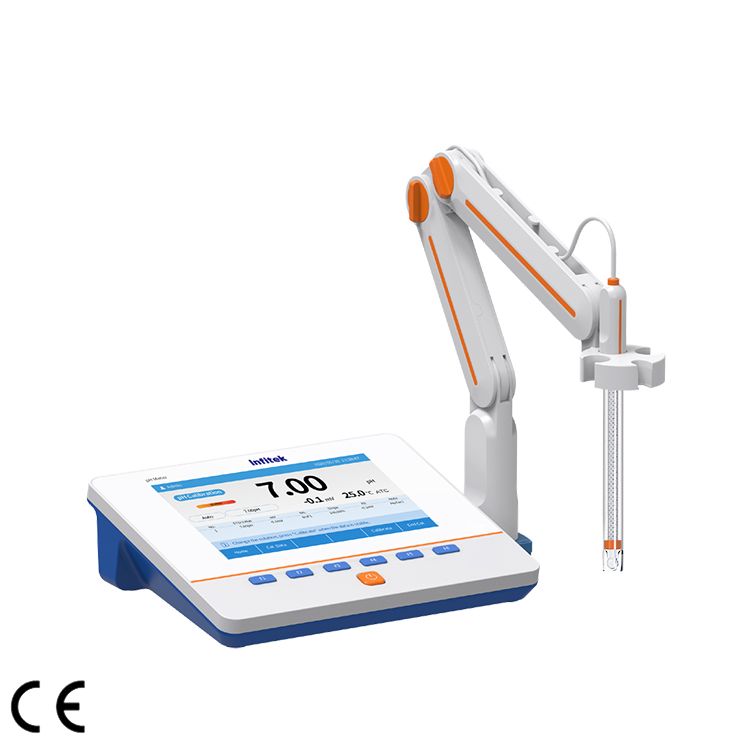
Benchtop pH Meter, PH-B300F

Glass Fermenter, GF-J Series

Refrigerated Centrifuge, CFGR-B16B




Get Social